Case study · Walmart supply chain · 2021–2023
I was asked to digitize a paper form. We redesigned how damaged goods move through a warehouse.
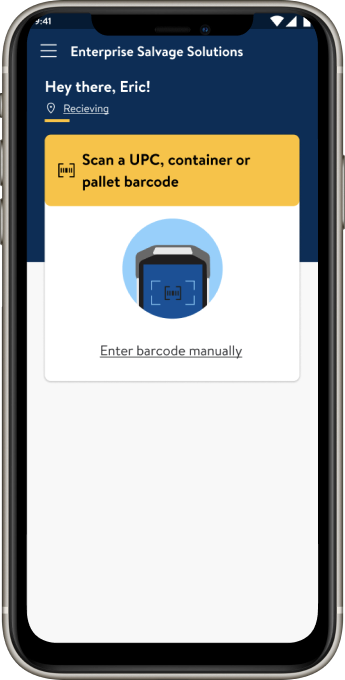
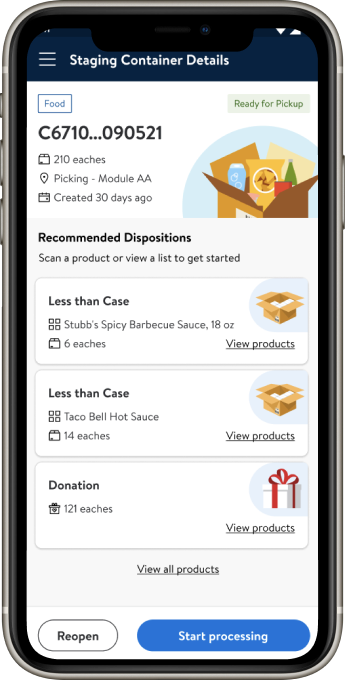
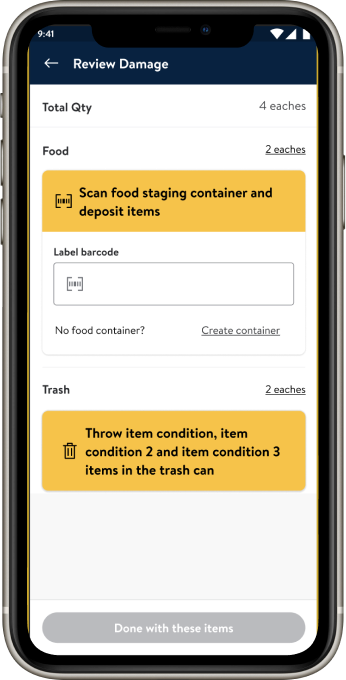
The business asked for a digital version of a paper form. As the sole designer, I mapped the whole damage process with the people who run it, and turned the project into a system that tracks every damaged item, routes it by rule, and changes how the warehouse floor works.
Impact
- Targeting $20M+ a year in savings
- Touches per item cut from 3+ to 1–2
My role
- Sole designer, with one product manager
- Research, service design, floor process and app
Users
- Orderfillers and receiving associates
- Reclaims clerks
What actually changed
Damage was always tracked, just on paper, and then retyped by hand. The new system captures it once, at the source, and cuts out the slowest, most error-prone step.
Read the full story
How a form request became a network-wide system: the field research, the reframe, designing the warehouse floor, the app, and the results. Password protected because the work is proprietary.
Email me for the password